

Application Migration and Re-engineering Services Introduction
Modernize Your Applications for Changing Business Needs
A Practical Path to Modernization
Business applications often need to evolve as organizations grow, processes change and technology requirements become more demanding. Older systems may be difficult to maintain, integrate with newer tools or adapt to changing user expectations. Application migration and re-engineering help businesses review these systems and plan a practical path forward.
Of2On can help businesses assess existing application requirements and explore suitable modernization options based on the current system, business objectives and technical constraints. Depending on the project, this work may involve moving an application to a new hosting environment, updating its architecture, improving selected modules, restructuring code or replacing outdated components.
A successful migration requires more than moving files or databases. It involves understanding application dependencies, data structures, integrations, user workflows, security considerations and operational requirements before implementation begins.
Our approach focuses on discovery, migration planning, controlled implementation, validation and handover. The exact activities depend on the application, its complexity and the agreed project scope.
Whether you need to move an existing application, improve a difficult-to-maintain codebase or prepare a system for future enhancements, Of2On can discuss the current challenges and help define a suitable modernization plan.
Upgrade with Application Migration and Re-engineering
Move Beyond Legacy Limitations with a Thoughtful Modernization Plan
Plan Before You Change
Applications can become harder to maintain when their original architecture no longer supports current business needs. Outdated dependencies, tightly connected modules, limited integration options and changing infrastructure requirements can make even small updates challenging.
Application migration focuses on moving an existing system, its data or selected components to a new environment while considering compatibility and continuity requirements. Re-engineering focuses on improving the way an application is structured or implemented so it can better support future changes.
Of2On approaches these projects by first understanding the existing application and the reasons for change. We review important workflows, dependencies, data, integrations and operational constraints before recommending a migration or modernization path.
Depending on the scope, the work may include application assessment, architecture review, code refactoring, database migration planning, API updates, environment configuration, testing and deployment coordination.
We also consider how users and connected systems will be affected during the transition. Validation, backup planning, rollback considerations and clear handover documentation are important parts of a responsible migration plan.
The result should be an application environment that better aligns with the business’s current requirements and provides a more manageable foundation for future improvements. Specific outcomes depend on the starting system and agreed project scope.
Application Migration and Modernization Services
Practical options for moving and improving existing applications.
Legacy App Migration

Platform Migration
Database Migration
Cloud Migration
App Re-engineering
Code Refactoring
API Modernization
Application Migration Solutions
Explore the key areas of application modernization.

Key Areas of Application Migration and Re-engineering
Review the existing application’s structure, features, dependencies, limitations and business-critical workflows to understand what should be retained, changed or replaced.
Examine how application components communicate, where responsibilities are coupled and which changes may support easier maintenance.
Review data structures, relationships, formats, validation needs and migration dependencies before planning information transfer.
Assess runtime, hosting, configuration, dependencies and infrastructure requirements before selecting a target environment.
Identify code areas that may benefit from restructuring, clearer responsibilities, updated dependencies or improved maintainability.
Review connected services, API contracts, authentication and data exchange workflows to identify modernization needs.
Consider authentication, authorization, secrets, permissions, data protection and dependency risks within the project scope.
Validate important user workflows, data accuracy, integrations and application behavior in the target environment before release.
Why Choose Of2On for Application Migration and Re-engineering
Assess First
We begin by understanding the existing application, its users, business workflows and technical constraints before defining the modernization scope.
✓
Business Priorities
We consider which components need to move, which areas need improvement and which existing behaviors must be preserved.
Strategy First
Review Dependencies
We review modules, databases, APIs and connected services so important dependencies are considered during planning.
</>
Maintainability
Where re-engineering is appropriate, we consider code organization, component responsibilities and future maintenance needs.
🖍️
Aa
🖼️
Validate Data
We plan checks for data integrity, application behavior and important user journeys as part of migration and testing.
HTML
CSS
JS
✓
Security and Fit
We review relevant access controls, configuration, dependencies and target-environment requirements within the agreed scope.
✓
Clear Handover
We aim to provide clear project communication and relevant technical handover information according to agreed deliverables.
Strategy First
Application Migration and Re-engineering Highlights
Core activities across your modernization project.
Build
Innovate
Grow
Innovate
Grow
Architecture Review
Deployment Prep
Handover Docs
Our Application Migration and Re-engineering Process
A structured journey from existing systems to a modernized application.
System Assessment
Understand the current application, its business purpose and why modernization is being considered. Review modules, workflows, dependencies, databases, integrations, limitations and risks.
System Assessment
Understand the current application, its business purpose and why modernization is being considered. Review modules, workflows, dependencies, databases, integrations, limitations and risks.
Migration Strategy
Select a migration or re-engineering approach based on application condition, business priorities and target needs. Define objectives, scope, dependencies, transition planning and acceptance criteria.
Migration Strategy
Select a migration or re-engineering approach based on application condition, business priorities and target needs. Define objectives, scope, dependencies, transition planning and acceptance criteria.
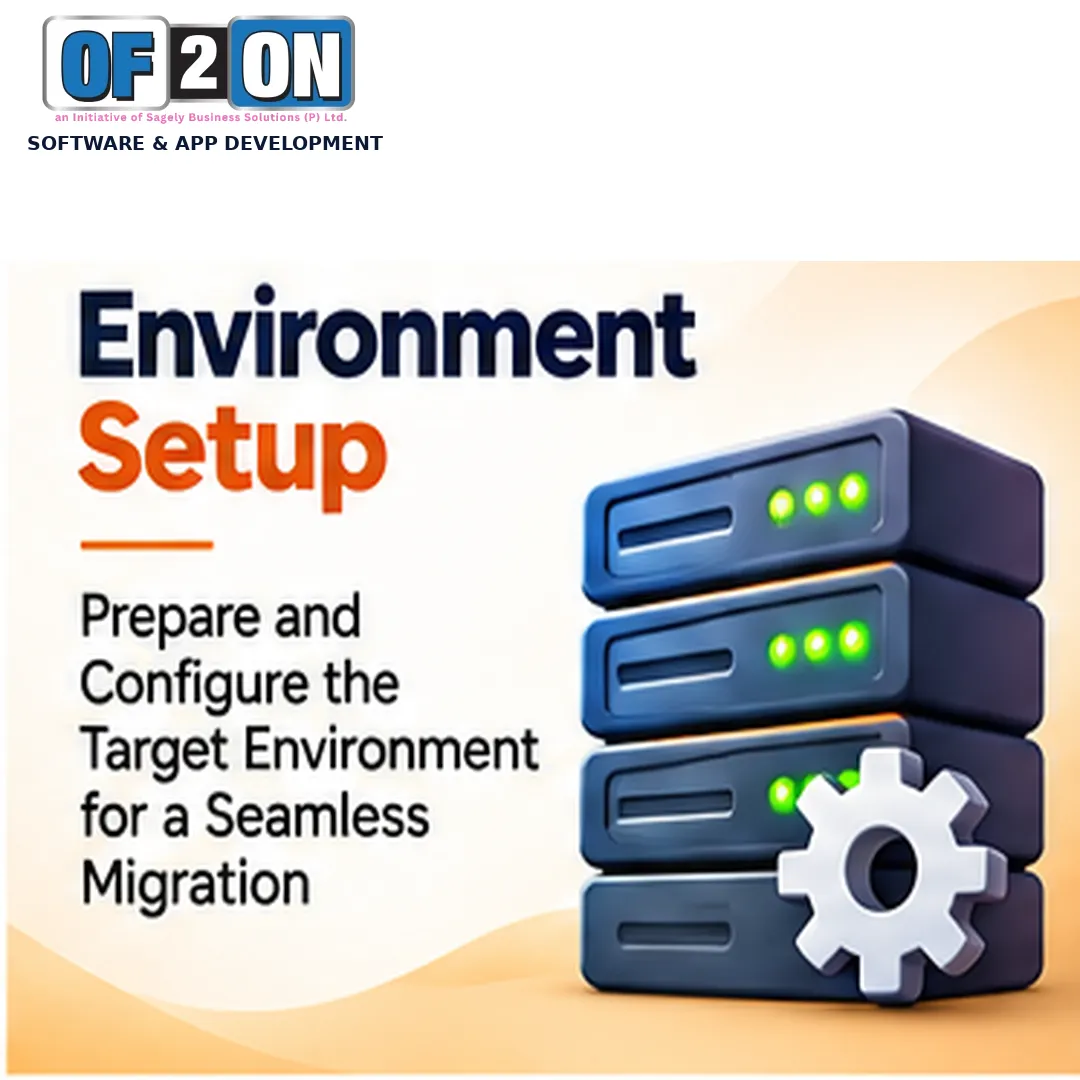
Environment Setup
Plan application structure and the target environment within agreed scope. Review runtime, dependencies, database preparation, APIs, integrations, access and security configuration.
Environment Setup
Plan application structure and the target environment within agreed scope. Review runtime, dependencies, database preparation, APIs, integrations, access and security configuration.
Migration Execution
Carry out approved migration or modernization work according to the implementation plan. This may include component migration, code refactoring, data transfer, API updates and configuration changes.
Migration Execution
Carry out approved migration or modernization work according to the implementation plan. This may include component migration, code refactoring, data transfer, API updates and configuration changes.
Test and Validate
Validate the updated application against agreed requirements. Check functional workflows, data integrity, integrations, compatibility, access, performance observations where included and tracked issues.
Test and Validate
Validate the updated application against agreed requirements. Check functional workflows, data integrity, integrations, compatibility, access, performance observations where included and tracked issues.
Release Transition
Coordinate release preparation according to the project plan. Consider readiness, backups, rollback options, configuration, production validation, stakeholder responsibilities and documentation without promising zero downtime.
Release Transition
Coordinate release preparation according to the project plan. Consider readiness, backups, rollback options, configuration, production validation, stakeholder responsibilities and documentation without promising zero downtime.
Application Migration and Re-engineering Overview
Modernize Existing Applications with a Clear Technical Strategy
Application migration and re-engineering help businesses adapt existing software systems to changing operational, technical and user requirements. As applications grow older, their architecture, dependencies and infrastructure may become harder to maintain. They may also become difficult to integrate with newer systems or extend with additional functionality.
Application migration generally involves moving an application, its data or selected components from one environment or platform to another. The destination may be a different hosting environment, updated infrastructure or another supported platform. The right approach depends on the application’s architecture, dependencies, data, security requirements and business constraints.
Application re-engineering focuses on improving an existing application’s internal structure or selected components. This may include code refactoring, architecture changes, dependency updates, API modernization, database improvements or interface updates. The purpose is to make the application more suitable for current requirements while considering the business functionality that must continue to work.
A successful project begins with discovery and assessment. The existing system should be reviewed to understand its modules, source code, frameworks, runtime requirements, databases, integrations, authentication methods and important user workflows. This assessment helps identify risks and clarify which components can be retained, migrated, improved or replaced.
Migration strategy is an important planning decision. Some projects may move an application with limited changes, while others may require gradual modernization or re-engineering before or during the transition. The chosen approach should reflect business priorities, technical complexity, available resources and acceptable operational impact.
Database migration requires careful attention to data structures, relationships, formats and validation. Before transferring information, the project should identify how application modules use the data and how consistency will be checked after migration. Backup, recovery and rollback considerations should be planned according to the importance of the information and operational requirements.
Application dependencies and integrations also need review. Connected APIs, external services, scheduled jobs, authentication systems, file storage and other dependencies may behave differently in a new environment. Identifying these connections early helps reduce unexpected issues during implementation and testing.
Re-engineering may involve reviewing code organization, separating responsibilities, reducing unnecessary complexity and updating selected components. Changes should be planned carefully so essential business rules and user workflows are preserved. Refactoring should be validated with appropriate tests rather than assumed safe simply because code has been reorganized.
Security and compatibility should be considered throughout modernization. Relevant checks may include access control, application secrets, configuration, dependency updates, secure communication, data handling and compatibility with the target runtime. Appropriate checks depend on the application’s technology and the sensitivity of its data.
Testing and validation help confirm that the updated application behaves as expected. This may include functional testing, integration testing, data integrity checks, compatibility review, user acceptance testing and performance observations. The project should define acceptance criteria and responsibilities before migration or release.
Deployment planning should consider release coordination, backups, rollback options, user communication and any required maintenance window. No migration can be assumed to have zero downtime or zero risk. The practical transition approach must be defined for the specific application and agreed with relevant stakeholders.
After migration, documentation and handover help the business understand the updated environment. Depending on the agreed scope, this may include architecture notes, configuration details, known limitations, operational guidance and recommendations for future improvements.
Of2On approaches application migration and re-engineering by first understanding the existing system and the business reason for change. Services may include application assessment, migration planning, environment preparation, code modernization, database and API updates, testing, deployment coordination and handover according to the agreed project scope.
The objective is not simply to move an application to a different environment. It is to help businesses make informed modernization decisions and create a more suitable foundation for maintaining and evolving their software systems.
Application Migration Project Checklist
Important areas to confirm before modernizing your application.
Business Goals
Current System
Code Dependencies
Architecture Review
Data Mapping
API Connections
Target Environment
Access Controls
Compatibility Needs
Migration Scope
Backup and Recovery
Testing Criteria
Cutover Plan
Handover Docs
Future Maintenance
Rollback Plan
Move Your Application Forward
Discuss your current system and modernization requirements with Of2On.


Improve the Foundation of Your Business Applications
Plan a migration or explore re-engineering options for your existing application.