


Ecommerce Website Design and Development Introduction
Build an Online Store Designed Around Your Business

A Store Designed for Your Customers
An ecommerce website gives businesses a digital storefront where customers can explore products, review details and place orders online. A well-planned store should make it easy for visitors to discover products, understand important information and complete the purchase journey across desktop, tablet and mobile devices.
Of2On helps businesses plan and develop ecommerce website experiences around their products, customers and operational requirements. The project begins with understanding the business model, product categories, customer journey, store functionality and systems that may need to connect with the website.
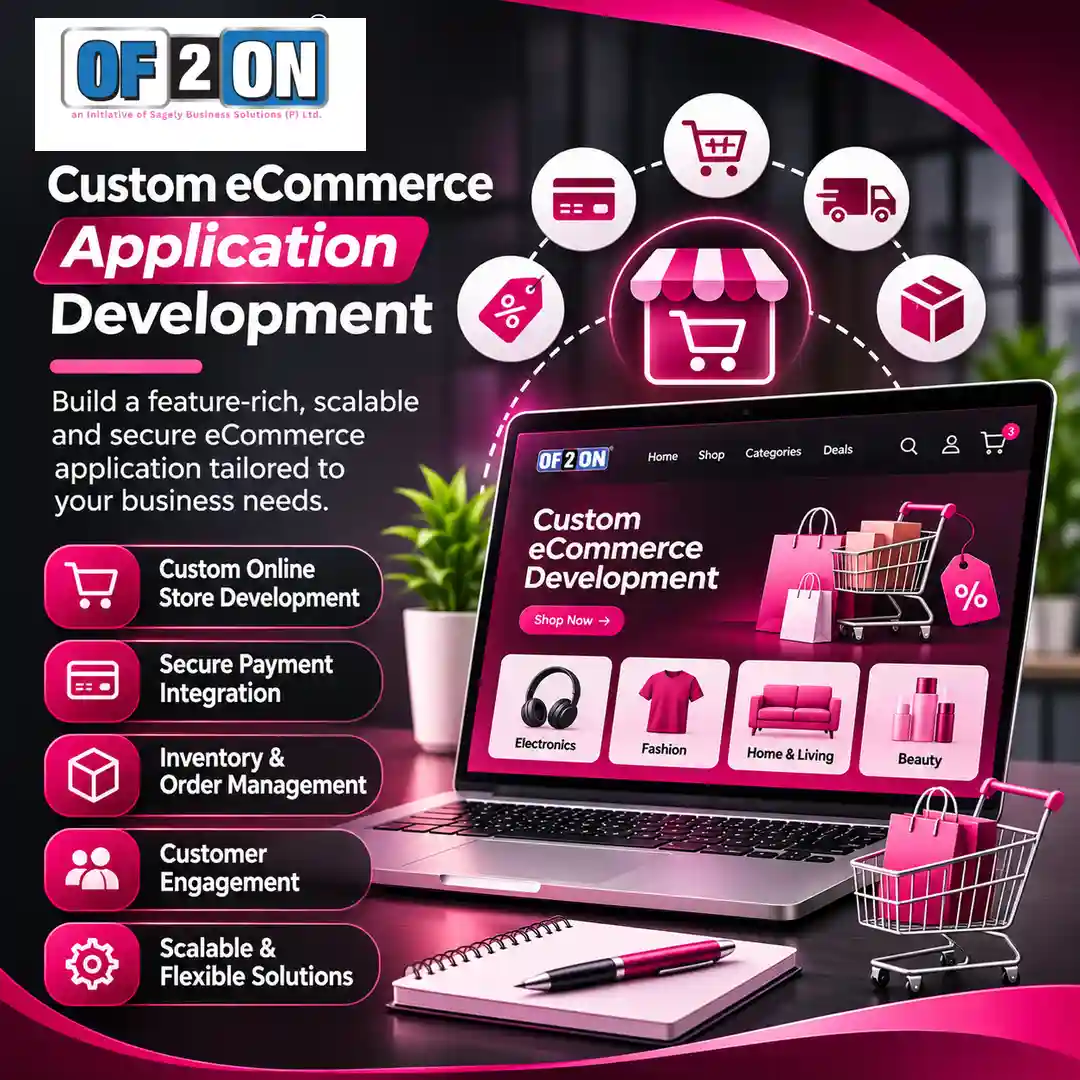
Depending on the agreed scope, an ecommerce project may include storefront design, product and category management, search and filtering, shopping cart, checkout flow, customer accounts, order management, payment integration, shipping configuration, promotional tools and administration features.
We consider the complete shopping journey, from the first product visit to order confirmation. Clear product information, straightforward navigation, responsive layouts and useful feedback can help create a more understandable shopping experience.
The technical approach and integrations are selected according to project requirements and Of2On’s verified capabilities. Testing, content preparation, release planning and future enhancements can also be included in the agreed scope.
Whether you are launching a new online store, taking an existing business online or improving an ecommerce website already in use, Of2On can discuss your requirements and help define a practical development plan.
Custom Ecommerce Website Development Services
Create a Smooth Shopping Experience Across Every Device
A Clear Path from Browse to Order
A successful ecommerce website needs to do more than display products. It should help customers find relevant items, understand product details, make informed choices and complete orders through a clear shopping process.
Of2On approaches ecommerce development by understanding the products being sold, the intended customers, the business’s order workflow and the administrative tasks required to operate the store. This helps define the pages, features and integrations needed for the project.
The storefront may include product categories, product detail pages, search and filters, image galleries, variants, wishlists, shopping carts, checkout, customer accounts and order status information, depending on the approved requirements.
The administration side may include product and inventory updates, category management, order processing, customer records, promotional content and reporting features. Exact capabilities depend on the selected platform and project scope.
We also consider mobile usability, page structure, form validation, performance, accessibility and appropriate security practices. Integrations such as payment gateways, shipping services, notifications or external business systems should be selected only after their requirements and availability are confirmed.
From planning and design to development, testing and release preparation, the objective is to create an ecommerce website that supports the business’s actual operations and gives customers a clear way to shop.

Ecommerce Website Types We Develop
Online store solutions for different business models.

B2C Stores

B2B Stores

Marketplaces

Brand Stores

Fashion Stores
Ecommerce Website Development Solutions
Explore the features and services behind an online store.









Essential Features of an Ecommerce Website
Create layouts that adapt to desktop, tablet and mobile screens so customers can browse and use store features on their preferred devices.
Organize products into meaningful categories and manage names, descriptions, images, prices and options through supported administration tools.
Help customers narrow product choices using relevant search, category navigation and filters based on the store catalogue.
Present product information, images, specifications, available options and other relevant details clearly.
Provide a clear process for reviewing selected items, entering required details and submitting an order.
Connect an approved payment provider when required, subject to account setup, availability, technical compatibility and project scope.
Support agreed workflows for reviewing orders, updating order status and managing product availability.
Plan shipping options, delivery information and supported logistics integrations around the business operating model.
Include customer account features such as profile details, addresses and previous orders when required by the project.
Support approved promotional features such as coupon codes, discount rules or campaign banners where included in scope.
Provide suitable administrative screens for managing store content and reviewing available operational information.
Consider secure configuration, access controls, input validation, dependency updates, backups and maintenance responsibilities.
Ecommerce Website Development Services We Provide
From storefront design to ecommerce functionality and integration.
Custom Ecommerce Website Design
Plan a clear, brand-aligned storefront.

Ecommerce Website Development
Build pages and agreed store workflows.

Product Catalogue Setup
Organize products, options and groups.

Cart and Checkout Development
Create a clear order submission flow.
Why Choose Of2On for Ecommerce Website Development
Store Planning
We begin by understanding your products, customers, order process and business goals so the store structure reflects actual operational needs.
✓
Customer Experience
We consider product discovery, page clarity, navigation and checkout usability when planning the storefront.
Strategy First
Responsive Design
We consider how product pages, forms and shopping workflows behave across screen sizes included in the project requirements.
</>
Feature Planning
We organize development around agreed store features, business rules and administrative workflows.
🖍️
Aa
🖼️
Integration Planning
We review payment, shipping and external system requirements before selecting integrations, subject to availability and compatibility.
HTML
CSS
JS
✓
Quality Validation
We plan checks for product pages, cart behavior, checkout steps, forms, order workflows and relevant integrations.
✓
Store Management
We consider how store content, products and features can be managed and updated using the agreed administration tools.
Strategy First
Ecommerce Website Development Highlights
Core features across your online store project.
Build
Innovate
Grow
Innovate
Grow
Category Setup
Search and Filters
Cart Development
Customer Accounts
Coupons and Deals
Release Preparation
Our Ecommerce Website Development Process
From business requirements to a tested online store.

Business Discovery
Understand the business model, product range, target customers and operational workflow. Discuss goals, product structure, store model, customer journey, features and integration needs.
Business Discovery
Understand the business model, product range, target customers and operational workflow. Discuss goals, product structure, store model, customer journey, features and integration needs.

Store Planning
Plan the storefront structure and customer journey. This can include page hierarchy, homepage and category layouts, product details, cart and checkout, mobile navigation and design refinement.
Store Planning
Plan the storefront structure and customer journey. This can include page hierarchy, homepage and category layouts, product details, cart and checkout, mobile navigation and design refinement.

Store Architecture
Define technical components needed for the approved store features. Assess platform options, modules, product data, administration roles, integrations, APIs and environment configuration.
Store Architecture
Define technical components needed for the approved store features. Assess platform options, modules, product data, administration roles, integrations, APIs and environment configuration.

Store Build
Implement approved storefront pages and ecommerce workflows. Work may include category and product pages, search, filters, variants, cart, checkout, customer accounts and administration features.
Store Build
Implement approved storefront pages and ecommerce workflows. Work may include category and product pages, search, filters, variants, cart, checkout, customer accounts and administration features.

Integration Setup
Configure supported payment, shipping and other integrations after confirming provider requirements and technical compatibility. Validate order flows, errors and notifications included in scope.
Integration Setup
Configure supported payment, shipping and other integrations after confirming provider requirements and technical compatibility. Validate order flows, errors and notifications included in scope.

Store Testing
Validate responsive layouts, product navigation, search, cart calculations, checkout forms, approved payment flows, order status and administration workflows before release.
Store Testing
Validate responsive layouts, product navigation, search, cart calculations, checkout forms, approved payment flows, order status and administration workflows before release.
Ecommerce Website Design and Development Overview
Create an Online Store That Supports Your Products and Business Workflow
An ecommerce website allows a business to present products or services online and accept orders through a digital shopping experience. Customers can browse categories, view product details, select available options, add items to a cart and complete an order through checkout.
A well-planned ecommerce project starts with understanding the business model. A single-brand store, wholesale ordering website and multi-vendor marketplace can have very different requirements. Product types, customer roles, order processes, fulfilment methods and administration needs should be identified before the store structure is finalized.
Storefront design plays an important role in helping customers understand and navigate the catalogue. Product categories should be organized logically, product pages should present useful information and important actions should be easy to locate. Responsive layouts matter because customers may browse and shop using desktop computers, tablets or mobile devices.
Product catalogue management is another core part of ecommerce development. Depending on the store, product records may include names, descriptions, images, prices, categories, variants, attributes, stock information and other details. The administration workflow should make it practical for authorized users to maintain this information.
Search and filtering can help customers find products within larger catalogues. Available filters should reflect information that matters to the business, such as category, price range, brand, size, color or product attributes. Search behavior and filter options should be planned around the actual product data.
A product detail page should provide enough information for customers to evaluate an item. This may include images, descriptions, specifications, variants, availability and relevant policies. Exact content depends on product type and business requirements.
The shopping cart gives customers an opportunity to review selected products and quantities before proceeding. Checkout should collect only information required to process the order and explain the steps clearly. Validation and helpful error messages can make the process easier to understand.
Payment integration depends on the selected payment provider, merchant account, supported methods and technical requirements. A development project may include connecting an approved provider, handling payment responses and associating transaction information with orders. Processing and provider approval remain subject to provider policies and account requirements.
Order management connects customer purchases with the business’s fulfilment process. Depending on scope, administrators may need to review orders, update statuses, manage cancellations, handle refunds or coordinate shipping. Inventory workflows may also be needed to reflect product availability and avoid inconsistent stock information.
Shipping and delivery configuration should reflect the business’s operating model. Stores may use flat delivery charges, location-based rules, pickup options or supported courier integrations. Options and third-party integration depend on provider availability and the merchant’s arrangements.
Customer accounts may provide features such as profile management, saved addresses and order history. Promotional tools may include coupons, discount rules, campaign banners or featured products when these features are part of the approved scope.
Security and privacy should be considered throughout ecommerce development. Relevant practices may include access control, input validation, secure communication, safe handling of credentials, dependency updates and careful treatment of customer information. Payment card data handling and compliance obligations depend on the selected payment provider and the merchant’s responsibilities. A development provider should not claim certification or legal compliance without verified evidence.
Testing helps validate the complete shopping journey. This may include product browsing, search, filters, cart calculations, checkout forms, payment responses, order creation, notifications and administration workflows. The test plan should reflect store features and agreed acceptance criteria.
After launch, an ecommerce website may need product catalogue updates, feature enhancements, compatibility improvements, security updates and maintenance as the business evolves. Responsibilities and service levels should be defined in the project agreement.
Of2On approaches ecommerce website development by understanding the business model and customer journey before planning store design, functionality and integrations. Services may include ecommerce UI/UX, storefront development, product catalogue features, cart and checkout workflows, supported integrations, testing, release preparation and enhancements according to the agreed scope.
The goal is to create an online store that presents products clearly, supports the business’s order workflow and provides customers with a straightforward way to shop.
Ecommerce Website Project Checklist
Important areas to confirm before building your online store.
Business Model
Target Users
Catalog Structure
Product Options
Store Pages
Search and Filters
Cart and Checkout
Payment Setup
Shipping Rules
Orders and Inventory
Accounts and Access
Promotions
API Connections
Security and Data
Product Migration
Testing Criteria
Domain and Hosting
Admin Handover
Store Maintenance
Build Your Online Store with Of2On
Discuss your products, shopping features and ecommerce requirements.


Build a Better Shopping Experience for Your Customers
Plan a new online store or improve your existing ecommerce website.