

Mobile App Development Services Introduction
Create Mobile Experiences That Keep Your Business Connected

Mobile Apps Around Your Users
Mobile applications help businesses connect with customers, support employees and make important services accessible through smartphones and tablets. From customer-facing apps and e-commerce experiences to booking platforms and internal business tools, a well-planned mobile application can make digital services more convenient and accessible.
Of2On helps businesses plan and develop mobile applications based on their objectives, target users and functional requirements. We begin by understanding the purpose of the app, the platforms it needs to support, the expected user journeys and the systems it may need to connect with.
Our mobile app development work can include requirement analysis, UI/UX design, application development, backend services, database integration, API connections, testing and release coordination, depending on the agreed project scope.
We focus on useful features, clear navigation, responsive interactions, appropriate security considerations and maintainable application structures. The development approach and technology choices are selected according to the project requirements and the team’s verified capabilities.
Whether you are planning a new mobile product, extending an existing web platform to mobile or improving an application already in use, Of2On can discuss your requirements and help define a practical development approach.
Robust Mobile Application Development Services
From Your App Idea to a Connected Mobile Experience
A Useful Mobile Experience
A successful mobile application starts with a clear understanding of the people who will use it and the tasks they need to complete. The app should make those tasks easier through a well-organized interface, useful functionality and reliable communication with the services behind it.
Of2On works with clients to understand their business goals, target audience, app features and technical requirements. We help organize the project scope, plan user journeys and identify the application components required to support the intended experience.
Depending on the project, development may include Android applications, iOS applications, cross-platform applications, mobile-friendly customer portals, e-commerce apps, booking systems, service applications and business tools. The exact platform and implementation approach are selected according to the project scope and confirmed technical capabilities.
Our work may cover UI/UX design, frontend implementation, backend development, database integration, APIs, authentication, notifications, payment or map integrations where supported, testing and release preparation.
We value clear requirements, regular progress reviews and practical quality checks. This helps keep the development process organized and gives stakeholders opportunities to review the app as it takes shape.
The goal is to create a mobile experience that serves a real purpose, is straightforward to use and can be maintained as business needs evolve.

Types of Mobile Applications We Develop
Mobile solutions for different business and customer needs.

Android Apps

iOS Apps

Cross-Platform Apps

E-commerce Apps

On-Demand Services

Business Apps

Booking Apps
Mobile App Development Solutions
Explore the services behind a complete mobile application.















Key Elements of Mobile Application Development
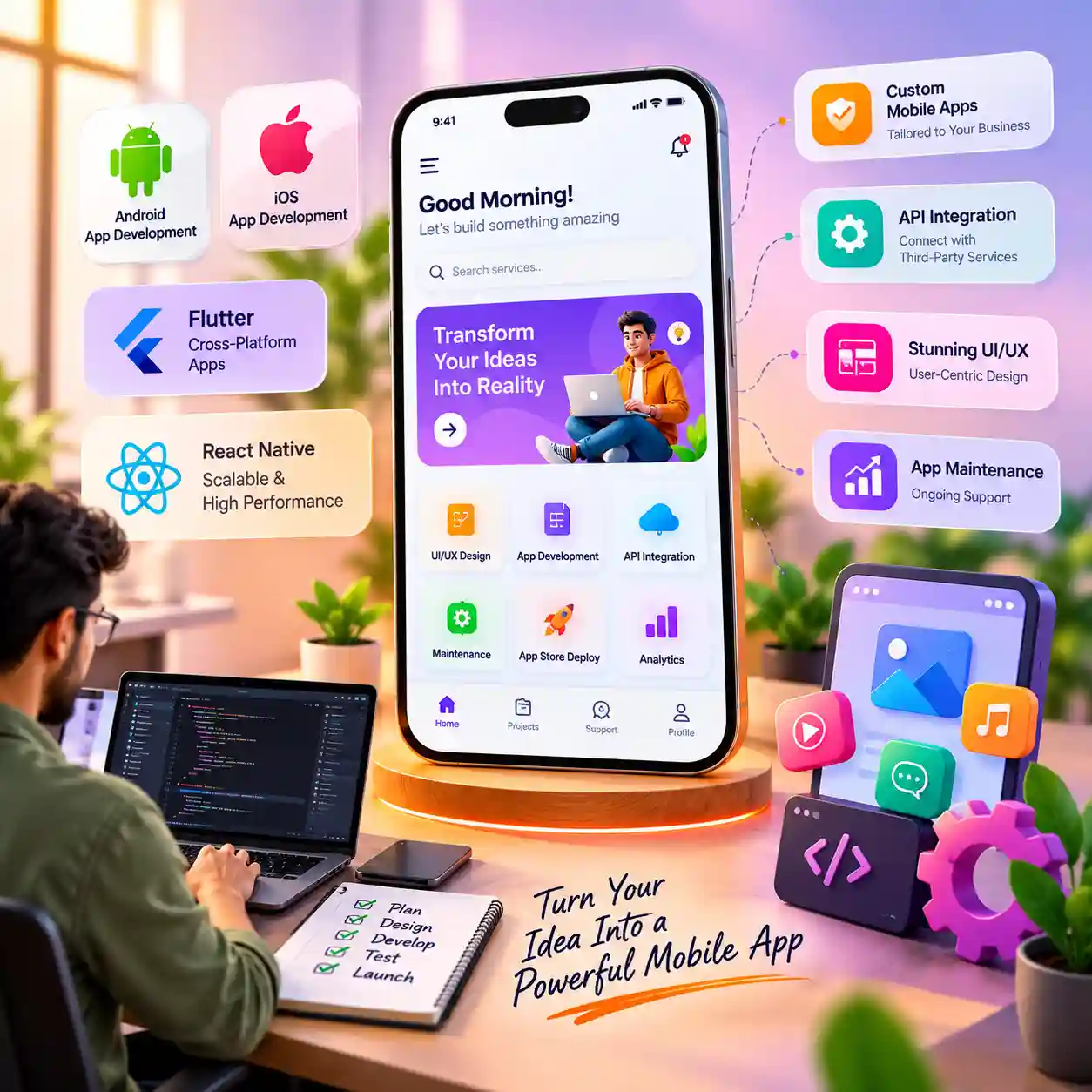
Define the app’s purpose, target audience, core features, supported platforms and expected user journeys before development begins.
Plan mobile-friendly layouts, navigation, touch interactions, screen hierarchy and clear feedback for user actions.
Select an implementation approach based on platforms, device features, performance needs and verified technical capabilities.
Connect the app to backend services and approved APIs for data exchange, accounts and application workflows.
Plan secure sign-in, account recovery, user roles and permissions according to application requirements.
Consider how application data is stored, retrieved and synchronized, including network and error handling where relevant.
Plan notifications and device capabilities only where they are required, supported and properly authorized by users.
Consider secure communication, authentication, sensitive data handling, permissions and dependency updates.
Review important workflows across the supported operating systems, screen sizes and device conditions.
Mobile App Development Services We Provide
From app planning and design to development and maintenance.

Mobile App Development Consulting
Clarify purpose, users and platforms.

UI/UX Design and Interaction
Plan clear mobile user journeys.

Android App Development
Develop for agreed Android needs.

iOS App Development
Plan for target iOS devices.

Cross-Platform App Development
Assess shared app approaches.
Why Choose Of2On for Mobile App Development
User-Centered Plan
We begin by understanding who will use the app, what they need to accomplish and which features matter to the business.
✓
Clear App Experience
We consider navigation, screen layouts, touch interactions and feedback so the application is straightforward to use.
Strategy First
Suitable Technology
We consider platform requirements, device capabilities, application complexity and maintainability when planning the technical approach.
</>
App Architecture
We plan how the mobile app communicates with backend services, databases and supported integrations.
🖍️
Aa
🖼️
Security and Privacy
We consider authentication, permissions, secure communication and responsible handling of app data within the project scope.
HTML
CSS
JS
✓
Quality Testing
We review important user journeys and test the application across the supported devices and environments agreed for the project.
✓
Ongoing Improvement
We can discuss agreed updates and enhancements as user expectations, platform requirements and business needs evolve.
Strategy First
Mobile App Development Highlights
Core activities across your mobile application project.
Build
Innovate
Grow
Innovate
Grow
iOS Apps
Push Notifications
Our Mobile App Development Process
From initial idea to a tested mobile application.

App Planning
Understand the business objective, target audience, app purpose and expected user journeys. Gather feature needs, review platform requirements and agree on scope, priorities and acceptance criteria.
App Planning
Understand the business objective, target audience, app purpose and expected user journeys. Gather feature needs, review platform requirements and agree on scope, priorities and acceptance criteria.

UI/UX Design
Plan mobile interfaces and user journeys for clear navigation and useful interactions. Activities may include wireframes, screen design, feedback planning, prototype review and refinement.
UI/UX Design
Plan mobile interfaces and user journeys for clear navigation and useful interactions. Activities may include wireframes, screen design, feedback planning, prototype review and refinement.

App Architecture
Define how the app, backend, database and integrations work together. Assess native or cross-platform approaches, APIs, authentication, permissions and data handling for the project.
App Architecture
Define how the app, backend, database and integrations work together. Assess native or cross-platform approaches, APIs, authentication, permissions and data handling for the project.

Application Build
Implement approved app features using selected technologies and agreed practices. Work can include screens, navigation, backend services, APIs, supported device features, source control and progress reviews.
Application Build
Implement approved app features using selected technologies and agreed practices. Work can include screens, navigation, backend services, APIs, supported device features, source control and progress reviews.

Testing and QA
Review the application against requirements across supported environments. Check functionality, navigation, forms, device compatibility, integrations, permissions, errors and tracked issues.
Testing and QA
Review the application against requirements across supported environments. Check functionality, navigation, forms, device compatibility, integrations, permissions, errors and tracked issues.
Release Preparation
Prepare the approved application according to agreed platform, account ownership and deployment responsibilities. Submission coordination may be included where agreed; platform approval is not guaranteed.
Release Preparation
Prepare the approved application according to agreed platform, account ownership and deployment responsibilities. Submission coordination may be included where agreed; platform approval is not guaranteed.

Maintenance Plan
Plan agreed fixes, operating system and device compatibility reviews, dependency updates, performance improvements and future enhancements as requirements evolve.
Maintenance Plan
Plan agreed fixes, operating system and device compatibility reviews, dependency updates, performance improvements and future enhancements as requirements evolve.
Mobile Application Development Overview
Plan and Build Mobile Applications Around Your Users and Business Goals
Mobile application development is the process of designing, building, testing and maintaining software applications for smartphones and tablets. Businesses use mobile apps to provide services, support customers, manage operations and make digital experiences available wherever users need them.
A mobile application project should begin with a clear purpose. The team needs to understand the target audience, the problem the app will solve, the essential features and the platforms and devices it needs to support. Requirement analysis helps define project scope and provides a basis for design, development and testing.
Platform planning is an important early decision. Depending on the project, an application may be developed for Android, iOS or multiple platforms through a cross-platform approach. The choice should consider required device features, performance, user experience, development complexity, maintenance and available technical capabilities.
UI/UX design shapes how people interact with the application. Mobile interfaces need to consider screen size, touch interactions, navigation, readable content, accessibility and clear feedback. Wireframes and prototypes can help stakeholders review important user journeys before implementation.
The application architecture defines how the mobile interface communicates with backend services and data sources. Many applications use APIs to retrieve information, submit user actions, authenticate accounts and connect with approved external services. Backend and database design should reflect the app’s business rules, data relationships and expected usage.
Mobile apps may use device capabilities such as camera access, location, file storage or notifications. These features should be included only when they support the app’s purpose. Permission requests should be clear, relevant and handled responsibly, with users informed about why access is needed.
Security and privacy should be considered throughout the project. Relevant practices may include secure communication, authentication, authorization, safe storage of sensitive information, appropriate permission handling, dependency updates and careful management of application credentials. Requirements depend on the app’s data and risk profile.
Testing helps verify that the app works as expected across supported devices and operating system versions. It may include functional testing, interface and navigation checks, form validation, API testing, permission review, network condition testing and error handling. Testing scope and acceptance criteria should be agreed before release.
Release preparation may include build configuration, app assets, store listing information, privacy details and submission coordination, depending on agreed responsibilities. Google Play and Apple App Store review and approval decisions are controlled by their respective platform providers, so approval cannot be guaranteed by a development provider.
After launch, mobile applications may need updates to support new operating system versions, device changes, security improvements, user feedback and evolving business requirements. Maintenance can include agreed bug fixes, compatibility updates, performance improvements and new features.
Of2On approaches mobile app development through requirement understanding, user-focused design, suitable technical planning, collaborative implementation and quality review. Services can include mobile app planning, UI/UX, application development, backend and API integration, testing, release preparation and maintenance according to the agreed project scope.
A successful mobile application is more than a collection of screens. It should solve a real user problem, provide a consistent experience, handle data responsibly and remain practical to maintain as the business evolves.
Mobile App Development Project Checklist
Important areas to confirm before your app project begins.
App Purpose
Target Users
Platform Needs
Feature Priorities
User Journeys
UI/UX and Access
Backend and APIs
Data Sync
Authentication
Device Permissions
Security and Privacy
Devices and OS
Testing Criteria
Release Plan
Documentation
Maintenance Scope
Turn Your Mobile App Idea into a Real Product
Discuss your app features, target platforms and development requirements.


Create Better Mobile Experiences for Your Customers
Plan a new mobile application or improve an existing app.